


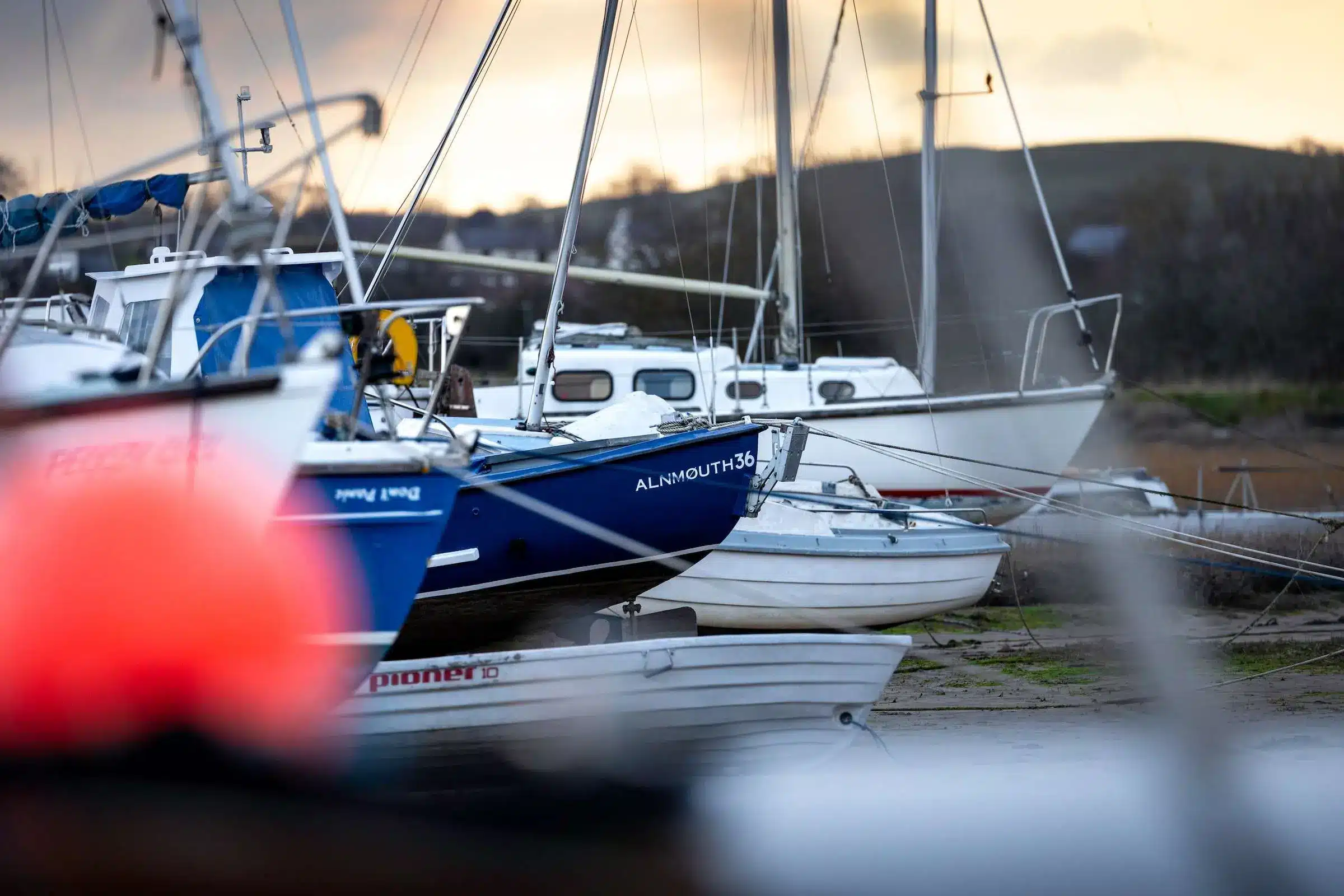
Winter brings with it extreme weather conditions and much colder temperatures, so keeping your boat safe is a priority. Here are our top tips for safe boat mooring in winter…
Check Your Fenders
Ensure your fenders are fully inflated and secured. Concentrate your fenders on the widest point of your boat and then space others evenly along the topsides for maximum protection. Remember that recommendations are to have one fender for every 10 feet of waterline, so a 40-foot boat would require four fenders.
You can also leave fenders at different heights to protect your boat no matter the water level if you’re moored in a place where water levels change dramatically.

Ensure You’re Using The Correct Berthing Lines
Berthling lines should be either braided or multi-plait polyester or nylon, and they should be doubled up, ideally with separate lengths of rope for proper protection and safe boat mooring in winter.
Take time to check all of your ropes thoroughly, as ropes can easily break under intense pressure, and this then puts more pressure on other lines. If your line is damaged, this part can be cut out using a dedicated tool, and you can still be left with a usable length of rope.
Think About High-Chafe Areas
Take some time to consider whether buying an anti-chafe protection product for your ropes in high-pressure areas might be a good idea. These can be the difference between a damaged, unsafe rope and one that is safe and fit for purpose. View our anti-chafe product recommendation here.
Check for Sharp Edges
Take some time to thoroughly check all your fairleads and cleats and ensure there are no sharp edges. If you find any, get rid of them as soon as possible, as it’s so easy for a rope to be destroyed by a sharp edge.

Remove Sails and Dodgers if Possible
The safest way to moor your boat over winter is to remove sails and dodgers if possible.
Moor Facing the Prevailing Wind
If you’re able to, moor your boat facing the predominant prevailing wind direction, as this will put your boat at less risk of damage.
Check on Your Boat Regularly
Try to get down and check on your boat regularly throughout the winter months, ideally once every two weeks, especially if high winds are in the forecast. Mooring your boat at the end of summer or autumn and expecting to return to it in top condition in spring isn’t realistic, and you should visit to ensure no covers have come loose, fenders haven’t moved or become deflated, and none of your lines have suffered damage.
Remove or Secure Everything
If you have spray hoods etc., that can be removed over winter, you should definitely do this. If they cannot be removed for whatever reason, you should secure them as much as possible. Consider frapping them if you can by passing additional ropes over the top of the canvas.
Check Your Mooring Strop
Check that you have two lines attached to your mooring strop and that they are in good condition and fed through the fairlead (check this for any sharp edges too). If there’s any issue with your mooring strop, contact your mooring master as soon as possible.

Ensure You Are Adequately Insured
This is a great time to check your boat insurance and cover level to ensure it’s adequate. Make sure you’re covered for winter mooring and if you only have Third Party cover, consider whether this is the best option for you or whether it might be worth upgrading your level of cover.
Follow all these tips, plus use your common sense for your own specific boat and mooring position to ensure your safe boat mooring in winter. It won’t be long until spring is here, and it’s time to get back out on the water!


